
Convert Any Unit
To Watts
The most accurate, beautifully designed power calculators and electrical resource database. Map, calculate, and understand wattage, voltage, and current flow instantly.
3D Interactive Power Simulator
A fully professional 3D visual circuit board simulation. Click switches below to route power, watch particle flows accelerate, and monitor grid load limits.
Appliance Wattage Tester
Select household appliances below to sum their cumulative wattage load. Visualise total draw relative to circuit thresholds in real-time.
Choose Your Power Converter
Select any of our calculators to get started. Each converter provides step-by-step formulas, comparisons, and custom visual diagrams.
Horsepower to Watts
Convert mechanical, electrical, and metric horsepower to watts. Standard configurations included.
Kilowatts to Watts
Instantly convert kilowatts (kW) to watts. Useful for measuring solar panel outputs and heavy appliances.
Megawatts to Watts
Convert industrial megawatts (MW) to watts. Standard for power grids and industrial energy grids.
Amps to Watts
Convert amperes (current) to watts (power) using DC, single-phase AC, or three-phase AC formulas.
Volts to Watts
Calculate power using Ohm's Law formulas: using resistance or current values.
BTU/hr to Watts
Convert British Thermal Units per hour to watts. Perfect for HVAC and home cooling systems.
kVA to Watts
Convert Apparent Power (kVA) to Real Power (Watts) utilizing the system's power factor.
Milliwatts to Watts
Convert small-scale milliwatts (mW) to watts. Frequently used in radio and RF engineering fields.
The Complete Guide to Watts & Power
Watt (W)
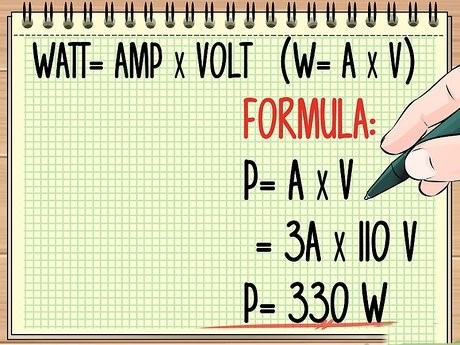
The SI unit of power, representing the rate of energy consumption or transfer. One watt is defined as one joule of energy expended per second (1 W = 1 J/s). Named after Scottish engineer James Watt, it is equivalent to the rate of work done in an electric circuit when a current of one ampere flows under a potential difference of one volt (W = V × I).
Volt (V)
The unit of electrical potential difference or electromotive force. It measures the potential electrical pressure that pushes electrons along a conducting path. Higher voltage means more pressure, enabling greater energy transfer rate for the same current volume.
Ampere (A)
The SI unit of electric current, measuring the rate of electron flow through a conductor. One ampere is equal to one coulomb of electric charge passing a given point in a circuit in one second. It represents the physical volume of electricity flowing.
Power Factor (PF)
In alternating current (AC) systems, the power factor is the ratio of real power (measured in watts) to apparent power (measured in volt-amperes). It ranges between 0.0 and 1.0. A lower power factor indicates reactive load offsets, meaning the source must generate more apparent current than the appliance converts into real work.
Core Mathematical Relationships
| Formula | Units Involved | Standard Application |
|---|---|---|
P = V × I | Watts, Volts, Amps | Direct current (DC) power calculation |
P = I² × R | Watts, Amps, Ohms | Resistive heat loss dissipation calculations |
P = V² / R | Watts, Volts, Ohms | Ohm's Law potential conversion |
P = V × I × PF | Watts, Volts, Amps, Power Factor | Single-Phase AC active workload capacity |
Frequently Asked Questions
Recent Blog & Guides
Stay informed on electrical calculations, appliance sizing benchmarks, and household power conservation tips.
How Many Watts Does a Refrigerator Use?
Determine how many watts a home refrigerator runs on. Compare chest freezers, smart fridges, and mini-bars.
How Many Watts Does an Air Conditioner Use?
Analyze AC unit power requirements by tonnage (12,000 BTU / 1 ton etc.) and calculate home operating costs.
Gaming PC Power Consumption: How Many Watts?
Calculate your gaming desktop PSU capacity. Compare RTX GPU power draws and CPU loads.
How Many Watts of Solar Do I Need?
Build an off-grid solar audit profile. Calculate panel counts and sun exposure hours.
Space Heater Wattage: Cost of 1500W draw
Why all electric resistive space heaters draw 1500W, and how much they cost to run per hour and per month.
The Complete Guide to Watts & Power
What are watts, how electrical power is calculated, and standard benchmark tables.
Welcome to To Watts
To Watts is a comprehensive, free online database and engineering resource directory dedicated to power conversion, electrical sizing, and physical energy unit relations. Our mission is to make complex electrical engineering calculations, thermodynamic unit relations, and mechanical formulas accessible to students, licensed electricians, HVAC technicians, solar system designers, and home DIY enthusiasts alike.
To calculate power metrics, users can navigate our tiered taxonomy: starting from standard motor benchmarks like Horsepower to Watts, kW to Watts, or the inverse conversions such as Watts to HP and Watts to kW. For home wiring projects and circuit safety auditing, standard sizers like Amps to Watts, Volts to Watts, and pre-filled long-tail sizers such as 15 Amps to Watts, 20 Amps to Watts, and 100 Amps to Watts allow real-time wire run ampacity calculations.
For commercial HVAC systems, cooling capacities are sized using Tons to Watts, SEER to Watts, and HVAC-specific thermal sizers like 12000 BTU to Watts and 1.5 Ton to Watts. Solar energy designers can compute array production levels using our Solar Panel Output Calculator, calculate panel density from W/m² to Watts, determine size peak capacity with kWp to Watts, and find generator options using our Generator Size Calculator and UPS Runtime Calculator.
Every single tool on To Watts is backed by precise physics equations, worked step-by-step math examples, and interactive visual diagrams showing current flow, helping you map electrical performance with zero latency.